
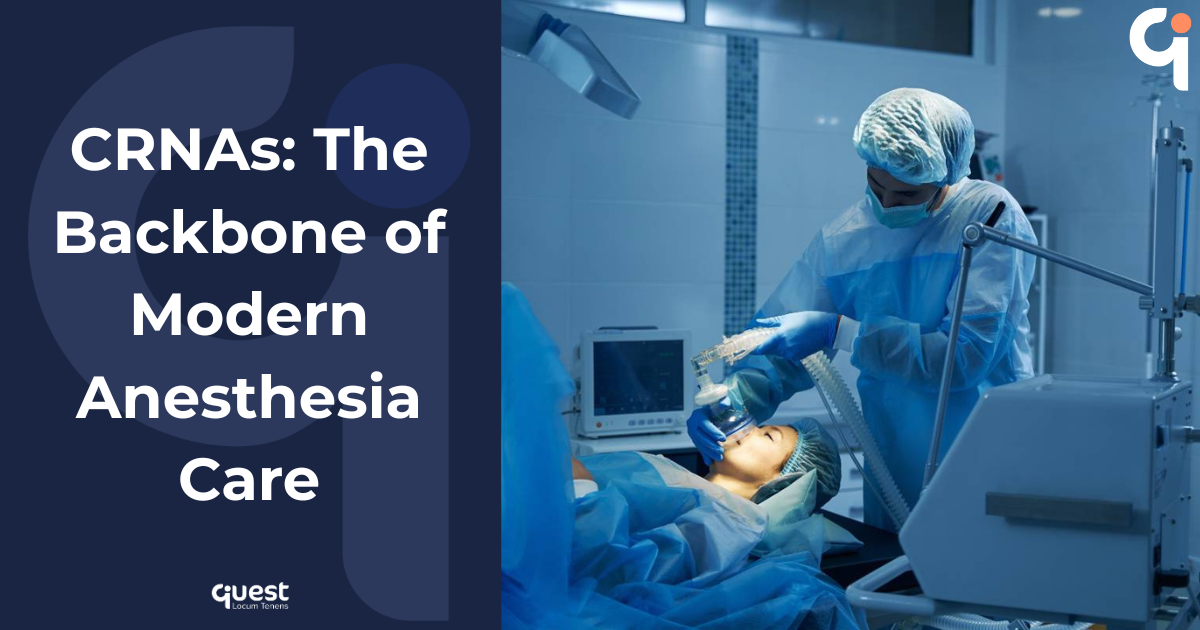
Every operating room tells a story—and at the center of many of them is a Certified Registered Nurse Anesthetist (CRNA).
During National CRNA Week (January 19–25), we pause to recognize the professionals who carry immense responsibility, deliver expert anesthesia care, and keep hospitals and surgical centers operating day after day.
CRNAs are not a supporting role in anesthesia care. They are highly trained clinicians, leaders, and decision-makers whose expertise is essential to modern healthcare delivery.
The Role of CRNAs in Today’s Healthcare System
CRNAs provide anesthesia care across nearly every clinical setting, making them one of the most versatile and in-demand professionals in healthcare. These settings include:
-
Trauma centers and tertiary hospitals
-
Community hospitals and rural healthcare facilities
-
OB units, GI labs, ambulatory surgery centers, and specialty service lines
In many states, CRNAs practice independently. In others, they work as part of collaborative anesthesia care teams. In every environment, CRNAs bring advanced clinical judgment, adaptability, and precision to some of the highest-risk moments in patient care.
Common Misconceptions About CRNAs
Despite their critical role, misconceptions about CRNAs still persist.
Myth: CRNAs only handle routine cases
Reality: CRNAs routinely manage complex cases, including trauma, high-acuity patients, critical airways, obstetric emergencies, and emergency surgical situations.
Myth: CRNAs exist only as extensions of anesthesiologists
Reality: CRNAs are autonomous anesthesia professionals with extensive training, clinical authority, and leadership responsibilities.
Myth: All CRNAs are interchangeable
Reality: Experience level, case mix, practice environment, and adaptability vary widely. Skilled CRNAs elevate entire departments and improve continuity of care.
Why Healthcare Facilities Depend on CRNAs
Hospitals and surgical facilities rely on CRNAs not just for anesthesia coverage, but for access, stability, and quality outcomes.
CRNAs help healthcare systems by:
-
Expanding access to anesthesia services, especially in rural and underserved areas
-
Supporting sustainable anesthesia staffing models
-
Providing flexibility during staffing shortages, surges, or service expansion
In many organizations, CRNAs are the difference between a service line remaining operational—or closing entirely.
The Importance of CRNAs in the Anesthesia Workforce
As anesthesia staffing challenges continue nationwide, CRNAs play a growing role in ensuring patient access to surgical and procedural care. Their ability to practice across diverse environments makes them a cornerstone of both permanent and locum tenens anesthesia staffing strategies.
Healthcare systems that invest in strong CRNA staffing models are better positioned to manage demand, reduce burnout, and maintain consistent care delivery.
A Thank You to CRNAs
To the CRNAs who arrive early, stay late, take call, manage pressure, and make critical decisions when it matters most—thank you.
Your expertise, resilience, and professionalism are vital to patient safety and healthcare access across the country.
Happy National CRNA Week.
— Quest Locum Tenens